

The monsoon rarely gives one clean instruction. The air is close before the rain, the street changes in minutes and the room you finally reach may be colder than the journey. A good outfit stays composed through each change.
That means starting with an outfit that works before the extra layer arrives. The shirt, polo and trousers need to look complete on their own. A jacket can help with a cool commute or hard air conditioning, but it should be easy to remove and honest about what it does. Unless a garment is described as water resistant, it is a layer, not rain protection.
The useful monsoon wardrobe is built around adjustment. Sleeves can move. A collar can hold the line after a jacket comes off. Darker trousers keep the base visually settled. Rich colour gives the day something the grey sky does not. These three looks are made for that in-between season.
Look 01
A checked shirt for the moving workday


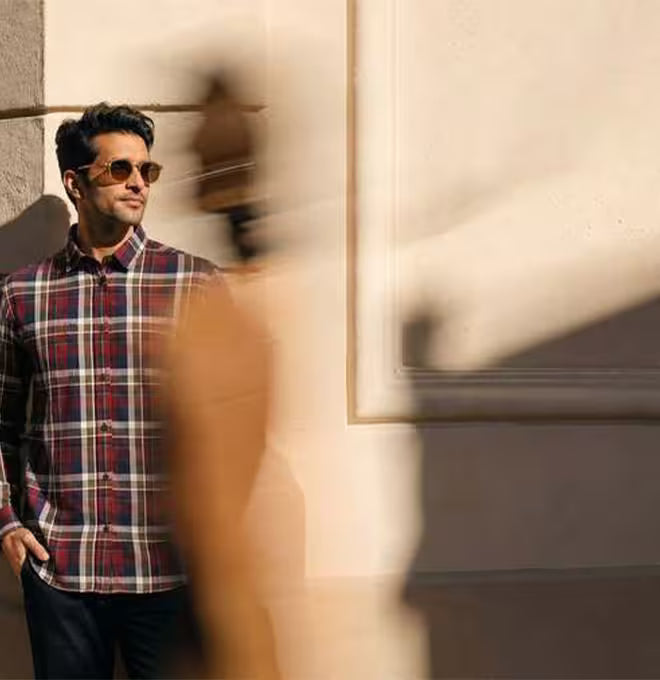
A checked shirt makes sense when the day moves between practical and presentable. The Burgundy Check Regular Fit Cotton Shirt has a classic fit, regular collar and full sleeves. The pattern carries the visual interest, while the burgundy, blue and pale lines sit easily against a dark base. Nothing else needs to fight for attention.
Wear it with the Men's Brooklyn Fit Stretchable Jeans in dark wash for a commute, a relaxed workplace or a Friday that is unlikely to end at the desk. For a cleaner meeting, replace the denim with navy cotton stretch trousers. The same shirt can hold both versions because its colour is deep without becoming formal.
Leave the sleeves down while you travel, then turn the cuffs once when the air warms. If you add a jacket, keep it plain and let the check remain the only pattern. Navy, charcoal or olive will sit comfortably beside burgundy. At the collar, give the layers space. A jacket worn open looks less crowded and comes off without disturbing the shirt beneath it.
The outfit can face the meeting table, a friend after work and the cab home without changing character. It looks considered in each place and keeps the effort to itself.
Look 02
A darker shirt after the rain
 Men's Printed Full Sleeves Linen Blend ShirtBlack and brown print
 Men's Brooklyn Fit Cotton Stretch TrousersNavy
The hour after rain has its own atmosphere. The light drops, the streets hold a little shine and an evening plan feels closer even when work is not finished. A darker printed shirt belongs naturally there.
The Men's Printed Full Sleeves Linen Blend Shirt has a classic fit, regular collar and a tonal pattern in black and brown. The print is visible up close, but the palette stays controlled. Pair it with the navy Men's Brooklyn Fit Cotton Stretch Trousers for a cleaner evening line. Dark wash jeans will make the outfit more relaxed and nearly tonal.
Keep the shirt as the only complex surface. Shoes, belt and jacket should stay plain. The outfit becomes stronger when the print is discovered rather than announced. Open the collar, keep the hem clean and resist the temptation to add another decorative layer.
Dark colour can be useful on a wet day, but it is not an excuse to ignore care. If the shirt gets damp, give it air before it goes into a bag or wardrobe. Follow the garment label for washing and pressing. A monsoon outfit should be easy to reset, because the next wearing matters as much as the first.
This look works best when dinner, a film or a late table is already somewhere in the day. It has enough presence for evening without asking you to carry a change of clothes.
Look 03
The polo for the hours in between

A full sleeve polo occupies useful middle ground. It is easier than a shirt, but the collar gives it more definition than a crew neck. The Men's Solid Polo T-shirt in wine has a regular fit and cotton blend fabric. Worn with the dark wash Brooklyn Fit Stretchable Jeans, it makes a straightforward base for uncertain weather and uncertain dress codes.
The colour does most of the work. Wine brings depth near the face and looks considered against indigo. For work, change the jeans to navy trousers and keep the rest of the outfit quiet. For a cooler indoor stretch, add a light plain jacket and remove it once the room or journey changes.
Keep the top button open. Let the sleeve length and collar provide the structure instead of forcing the outfit towards formality. A white or grey sneaker will lift the darker palette. A brown shoe will make it more traditional. Choose according to where the day is going, not because one option is universally correct.
The advantage of this look is how little adjustment it needs. Jacket on for the commute. Jacket off indoors. The base remains finished either way.
A jacket has one honest job
In monsoon dressing, a casual jacket is useful for temperature and finish. It can help through a windy ride, a cold office or the hour after sunset. It should be light enough to carry once it comes off, and roomy enough to sit over a polo or shirt without pulling at the shoulder.
It should not be mistaken for rainwear unless the product information says it is water resistant. A regular cotton, polyester or blended jacket may react differently to water, and appearance alone proves nothing. Use an umbrella or a purpose-made rain layer outside. Let the jacket handle the part of the day it was chosen for.
That honesty improves the outfit. You stop overbuilding for every possible forecast and start dressing for the route you actually take.
Keep the hem out of the weather
The lower half decides whether a monsoon outfit stays clean. Jeans or trousers that stack heavily at the ankle are more likely to meet wet pavement and road dirt. A clean break over the shoe gives the leg a sharper line and keeps excess fabric out of the way. If you alter trousers, have the hem marked while wearing the shoes you use most.
Dark wash denim is a useful visual base in a busy city. Navy trousers do the same work when the day asks for more polish. Neither needs to pretend to be technical clothing. Their value is simpler. They ground colour and pattern above, and they continue to look deliberate when the surroundings are not.
Avoid an unnecessary cuff on a wet day. The turned fabric can hold water and dirt. If the jean length is right, let the hem fall cleanly. Save the roll for a dry evening.
Colour when the sky has none
Weeks of grey weather can push a wardrobe towards black by habit. Keep the depth, but introduce colour where it changes the face of the outfit. Burgundy, wine, olive and muted blue all work well against navy, charcoal and dark denim. One rich tone is usually enough.
Pattern can play the same role. A check gives movement to the workday shirt. A tonal print becomes more interesting as the light drops. If the top has detail, keep the trouser and outer layer solid. If the top is plain, texture or a stronger shoe can do a little more.
Colour here is restrained, not anonymous. Quiet confidence still needs a point of view.
The reset at home
Take damp clothes off as soon as it is practical. Hang them where air can move around the fabric and let them dry fully before folding or returning them to the wardrobe. Do not stack a damp shirt under dry clothes. If a trouser hem has picked up dirt, check the care label before cleaning it.
Heat is not a universal shortcut. Fabrics and finishes respond differently to tumble drying or a hot iron, so follow the instructions on the garment. Clean the surface of shoes, let them dry separately and replace wet socks early if you can. A small change kit at work or in the car can be more useful than an extra fashion layer.
This routine is not glamorous, which is exactly why it matters. Clothes that are properly reset are ready when the weather turns again.
Monsoon style questions
What should men wear during the monsoon?
Start with a complete base such as a cotton shirt, a linen blend shirt or a polo. Add a light removable layer only when the commute or destination needs it. Keep trouser and jean hems clear of the ground.
Are dark colours better for rainy days?
Dark trousers and jeans can make small surface marks less obvious, but the whole outfit does not need to be dark. Burgundy, wine, olive and muted blue add depth without making the look loud.
Can a casual jacket be used as rainwear?
Only when the product page or garment label makes a specific water resistant claim. Otherwise, treat it as a style and temperature layer and use proper rain protection outside.
Monsoon style works when every piece understands its role. Build the base first, keep one layer within reach and use colour with restraint. The forecast can change by the hour. You should not have to change who you are with it.
