

The monsoon rarely gives one clean instruction. The air is close before the rain, the street changes in minutes, and the room you finally reach is colder than the walk to it. A good outfit stays composed through all three. Here are three that do — built from full-sleeve shirts, one honest layer, and colour that holds its own against a grey sky.
The short version
Build each monsoon outfit so it looks finished before any extra layer arrives. Start with a full-sleeve shirt or polo that stands on its own, ground it with dark trousers or dark-wash denim, and keep one rich colour in play so the grey outside has something to answer to. Add a light jacket only for the cold commute or the over-cooled room, and take it off the moment the air changes. Keep hems clear of wet pavement, and treat any jacket as a style layer — not rainwear — unless the label says water resistant.
What a monsoon wardrobe actually needs
Monsoon dressing is really about adjustment. The temperature you leave home in is not the one you arrive in, so the useful wardrobe is the one that shifts with the day rather than betting on a single forecast. Sleeves that roll. A collar that holds the line once a jacket comes off. A base that reads as complete on its own, so the layer is a choice and not a crutch.
Two things do most of the heavy lifting. Dark trousers and dark-wash denim keep the lower half settled and forgive the small marks a wet street leaves behind. And one rich colour up top — burgundy, wine, deep brown, a muted check — gives the outfit a point of view the weather can't drain out of it. Get those right and the rest is just knowing when to add the jacket and when to carry it.
Build the monsoon capsule
Shop the categories first, then layer colour and pattern on top. Each of these earns its place across a changeable week:
- Full-sleeve shirts — your source of colour, pattern and an easy rolled-sleeve adjustment. One check for the workday, one darker print for the evening covers most of the season.
- Polos — more structure than a tee, less formality than a shirt. The piece for the undecided hours in between.
- Trousers — black, navy and deep brown are the settled bases that take marks in their stride and lift the colour above them.
- Jeans — a dark wash is the busy-city base that slides from a damp commute into the evening without flinching.
For richer patterns with actual lineage, Madras Checks is the brand's home turf — the kind of check that reads considered on a grey day rather than loud.
Four rules for the in-between season
Finish the base first
The shirt, polo and trousers should look complete before any jacket arrives. A layer earns its place by helping with a cool commute or a cold room, then coming off cleanly — it should never be the thing holding the outfit together. Dress for the route you actually take, not every forecast at once.
Keep colour in the frame
Weeks of grey pull a wardrobe toward black by habit. Keep the depth, but let one rich tone change the face of the outfit — burgundy, wine, deep brown or a muted check. One strong colour is usually enough; if the top carries it, keep the trouser and any layer solid.
Keep the hem out of the weather
The lower half decides whether a monsoon outfit stays clean. Trousers that stack heavily at the ankle meet wet pavement and road dirt; a clean break over the shoe keeps excess fabric out of the way. Skip the cuff on a wet day — a turned hem holds water and grit. Save the roll for a dry evening.
Let the jacket do one job
A casual jacket handles temperature and finish — a windy ride, a cold office, the hour after sunset. It should be light enough to carry once it's off. Treat it as a style layer, not rainwear, unless the product page says water resistant. An umbrella covers the rest.
Three monsoon formulas to steal
Look 01
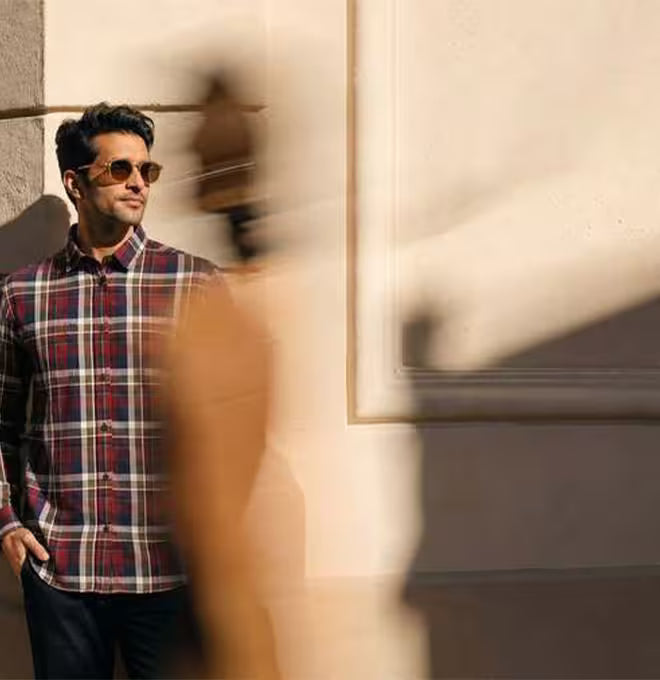
A check shirt for the moving workday


A check earns its keep when the day moves between practical and presentable. The pattern carries the interest while the warm choco, rust and cream lines sit easily against a dark wash, so nothing else has to fight for attention. Leave the sleeves down for the commute, then turn the cuffs once when the air warms. For a cleaner meeting, swap the denim for navy trousers — the same shirt holds both because its colour runs deep without turning formal.
Look 02
A darker shirt after the rain


The hour after rain has its own atmosphere — the light drops, the streets hold a shine, and an evening plan feels closer even when work isn't finished. A darker printed shirt belongs there naturally. The botanical print reveals itself up close while the palette stays controlled from across a room. Pair it with navy trousers for a clean evening line, or dark-wash denim to keep it relaxed and nearly tonal. Keep the shirt as the only complex surface: plain belt, plain shoes, collar open.
Look 03
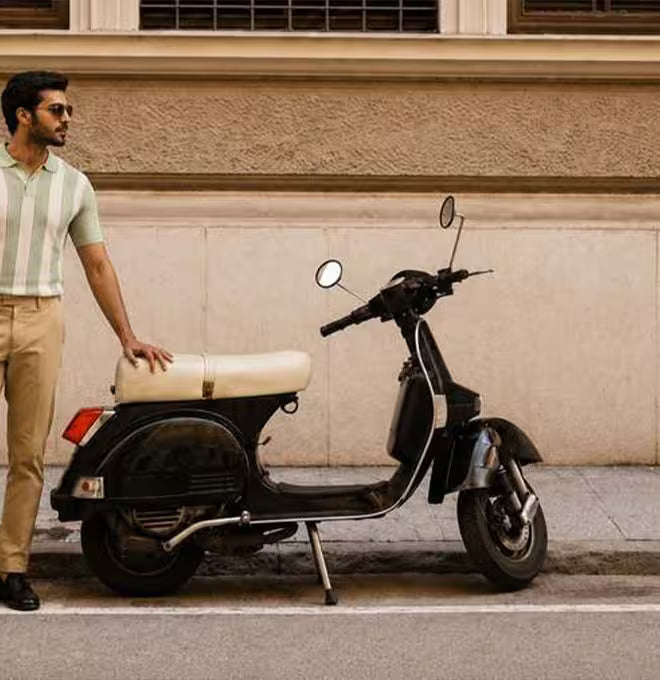
The polo for the hours in between

A polo holds useful middle ground — easier than a shirt, but the collar gives it more definition than a crew neck. The maroon does most of the work here, bringing depth near the face and reading considered against dark trousers. Keep the top button open and let the collar provide the structure. Jacket on for the commute, jacket off indoors; the base stays finished either way. For a cooler indoor stretch, a light plain layer over the shoulder is all it needs.
The reset when you get home
Take damp clothes off as soon as it's practical and hang them where air can move around the fabric — never stack a damp shirt under dry ones, and let everything dry fully before it goes back in the wardrobe. If a trouser hem has picked up dirt, check the care label before cleaning it. Heat is not a universal shortcut: fabrics and finishes respond differently to a hot iron or the dryer, so follow the instructions on the garment.
None of this is glamorous, which is exactly why it matters. A small change kit at work or in the car often does more than an extra fashion layer, and clothes that are properly reset are ready when the weather turns again.
Getting the fit right when you buy online
You can't try it on through a screen, so let a garment you already trust do the measuring. Lay a well-fitting shirt, polo and trouser flat and compare their numbers to the product size guide rather than the letter on the label. For tops, check chest, shoulder, sleeve and length; for bottoms, waist, rise, thigh, inseam and leg opening. A little stretch buys movement, but it's a comfort feature, not a licence to size down — and glance at the returns window before the tags come off.
Monsoon style, answered
What should men wear during the monsoon?
Start with a complete base — a full-sleeve cotton shirt or a polo — grounded by dark trousers or dark-wash denim. Add a light, removable layer only when the commute or destination needs it, and keep hems clear of the ground. Let one rich colour carry the outfit so it holds up against a grey sky.
Are dark colours better for rainy days?
Dark trousers and jeans make small surface marks less obvious, so they're a practical base — but the whole outfit doesn't need to be dark. Burgundy, wine, deep brown and a muted check add depth without making the look loud.
Can a casual jacket be used as rainwear?
Only when the product page or garment label makes a specific water-resistant claim. Otherwise treat it as a style and temperature layer — useful for a cold room or a windy ride — and use an umbrella or a purpose-made rain layer outside.
How should I care for clothes that get damp?
Take damp clothes off as soon as it's practical and hang them where air can circulate, drying them fully before folding. Don't stack a damp shirt under dry clothes. Follow the garment label for washing and pressing, since heat affects fabrics and finishes differently.
How do I choose the right size when shopping online?
Compare the brand's garment measurements against a similar item you already own, measured flat and unstretched. If you're between sizes, factor in the cut and how much the fabric gives, then check the return terms before ordering.
Build the base first, keep one layer within reach, and use colour with restraint — the forecast can change by the hour, but you shouldn't have to change with it. Build your own monsoon edit from the shirts, polos, trousers and jeans at Indian Terrain — made for where the day takes you, rain included.
